
From the desk of David Utke
Subj: 14 Skillshare classes closed instantly
I’ve made close to $16,000 on Skillshare all together. Real royalty income flowing into my life from courses I recorded once and uploaded years ago (with updates every 6-12 months as needed and replies to student questions).
So when people ask me if teaching on Skillshare is worth it, my instinct is to say yes, go for it.
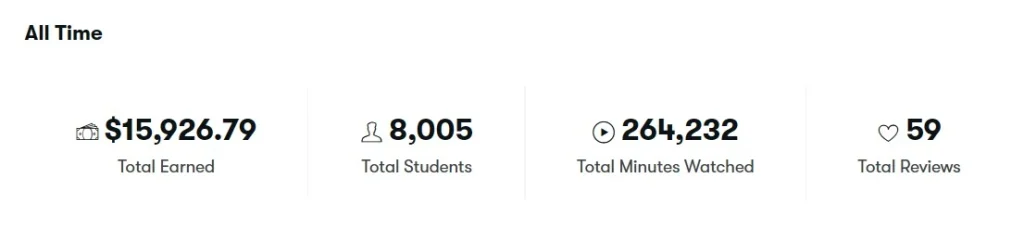
This is over 5 years, earning about $120 on the low end to $450 on the high end per month. Fairly hands off once the courses are approved and live on the site.
BUT, I just got hit with a reminder of why platforms like this should come with a warning label.
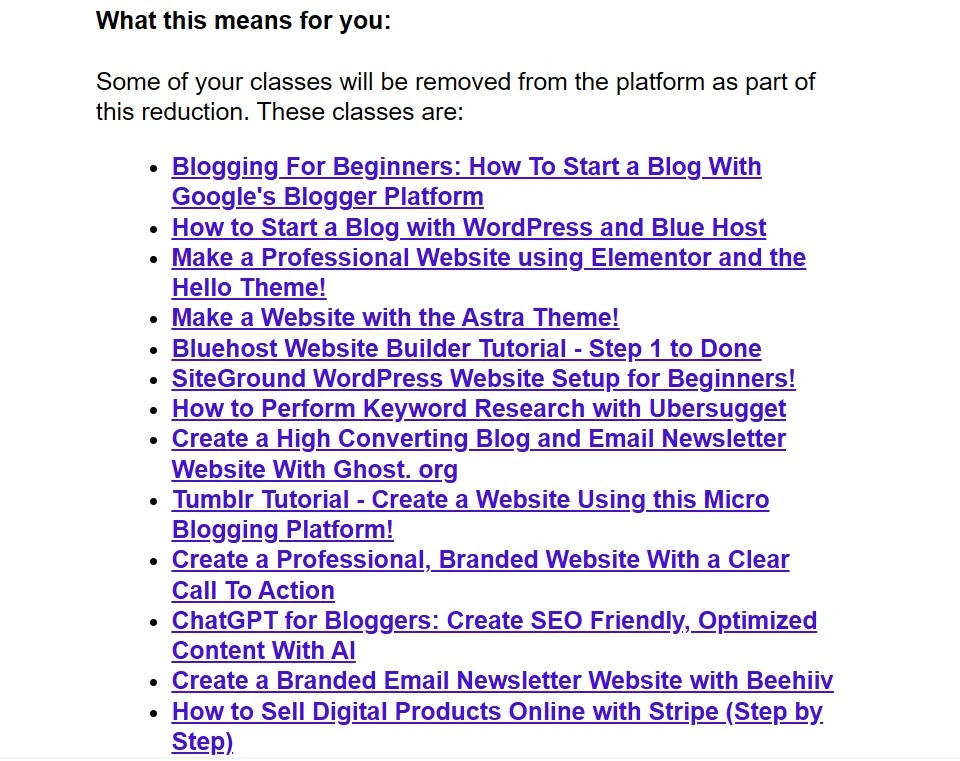
Skillshare recently announced it’s cutting its catalogue, and most of my courses got caught in the removal process.
So let’s talk about both sides of this.
The Money Is Real
I built a small, but consistent part of my income around teaching practical, tutorial-style classes. Things like how to start a blog, how to set up WordPress hosting, how to build a website with Elementor or Astra, how to sell digital products with Stripe.
The boring, but essential “how do I actually do this” content. That’s exactly what Skillshare’s audience wanted when I first got started with the platform.
Because Skillshare pays out based on watch minutes across their subscription base, a course you record once can keep paying you for years if it gets consistent student enrollment and watch time.
I didn’t have to relaunch anything, run ads, or chase new customers.
The royalties just showed up every month to my PayPal.
The Big Pro: Skillshare Does the Marketing For You
Skillshare already has millions of members browsing for exactly the kind of thing you teach. You don’t have to build out and market your own platform.
You upload your class, and their algorithm and category pages do the discovery work. Skillshare also heavily promotes high-quality content via Staff Picks and platform newsletters.
For niche specific content or a beginner teacher, this is huge. You can get quick feedback on your teaching style and production value and know fast if you need to level up.
You can also get in front of an audience you could never afford to reach on your own and make passive income. You do however give up a cut of control and revenue in exchange for built-in distribution.
That’s the trade you’re making and it’s fair as far as I can tell.
The Catch: It’s Not Your Platform
Skillshare is making sweeping changes to its catalog.
I got an email laying out the details (shared previously), and it’s worth breaking down because it shows exactly what the risk looks like in practice.
Skillshare is pausing new content and reducing what’s already live in several categories, including:
- Development
- Home & Lifestyle
- Writing & Publishing
- Personal Development
- Marketing & Business
- Music & Audio.
If you teach in any of those categories, you’re affected whether your course is good or not.
In my case, this wiped out most of my catalogue.
Courses on using Ghost or Beehiiv for newsletters, selling digital products with Stripe, even a class on Fourthwall and YouTube’s merch shelf.
All gone.
As of June 18, 2026, they stopped being discoverable. By July 9, 2026, they’re removed from the platform entirely.
On top of that, Skillshare is raising the bar for who even qualifies for royalty payments.
Starting July 16, you need at least 50 followers, plus either a new class published in the last 18 months with 400+ minutes watched, or no new class but 650+ minutes watched.
If you’re not hitting those numbers, you don’t get paid, even if your course is still technically live and getting students and watch time.
Lucky for me, since I started I now have 500 followers so I’m good for that, and I have publish a new course within the last 18 months and do seem to be on track to crush 400 minutes easily.
None of this happened because my courses were low quality.
It happened because Skillshare decided to reshape its business, and as a teacher, I had zero say in it.
That’s the real lesson here, you’re building on someone else’s land. They can change the rules, shrink the categories, or move the goalposts on payouts, and you just have to live with it.
Why Is Skillshare Doing This?
For years they chased catalogue size. More categories, more classes, more teachers. The problem is a sprawling catalogue spreads the same pool of watch minutes across way more content.
That means payouts get diluted for everyone.
Established teachers see their earnings shrink even as they keep producing, and newer teachers in niche categories can barely make anything at all.
So instead of continuing to grow wide, Skillshare is narrowing down to the categories where most members actually spend their time. Fewer categories, fewer competing classes, and in theory a bigger slice of the pie for the teachers who are left.
Whatever their actual growth numbers look like right now, this is a common playbook for subscription platforms with a big content library: consolidate around what performs best, cut the rest, and tighten who qualifies for payment so the money isn’t spread across inactive or barely-watched content.
The Potential Upside for Teachers Who Qualify
Time will tell, but this could be a positive move for teachers.
Less competition in your category means your classes get more visibility on Skillshare’s browse and search pages.
A smaller pool of active teachers splitting a big pool of watch minutes usually means better payouts per minute watched, not worse.
It also pushes the platform toward quality over quantity
If Skillshare is serious about supporting teachers (and categories) who drive real engagement, that’s a more sustainable place to build than a platform that’s spread thin across everything.
The catch is you have to stay active
The new rules reward teachers who keep pulling in watch minutes.
If you’re coasting on old courses you’ve not updated and low engagement, you’re exactly the kind of account this change is designed to phase out.
So, Should You Teach on Skillshare?
Yes, I still think it’s worth it. But go in with the right expectations.
- Treat it as a bonus income stream, not a foundation. My original goal was to make $700 a month, I never hit that, but I never thought that Skillshare would be a primary income source for me in the first place.
- Use Skillshare as an extra distribution channel, not the only one unless over time you become a top teacher on the platform.
- Diversify or pivot what you teach if you’re course catalog got decimated like mine did.
- You have to accept not qualifying for payments as a new teacher. Until you have 50 followers minimum and 450 minutes of watch time in a month, you’re not getting any royalties.
The upside of Skillshare is real. No marketing required, built-in audience, and passive income from stuff you already know how to teach.
I made real money there.
But this latest round of changes is a good reminder that you’re a tenant, not an owner.
Till next time. Your man,
-David
*Get one month free
How I can help you. You're here, let's do this:
1. Website Review Your website may be clear and specific to you, but it may be really confusing to anyone who visits. That's where I come it, I'll give you actionalbe feedback to improve your site with my highly rated gig.2. My YouTube channel Helpful video tutorials showing you how to launch, grow and monetize your audience.


